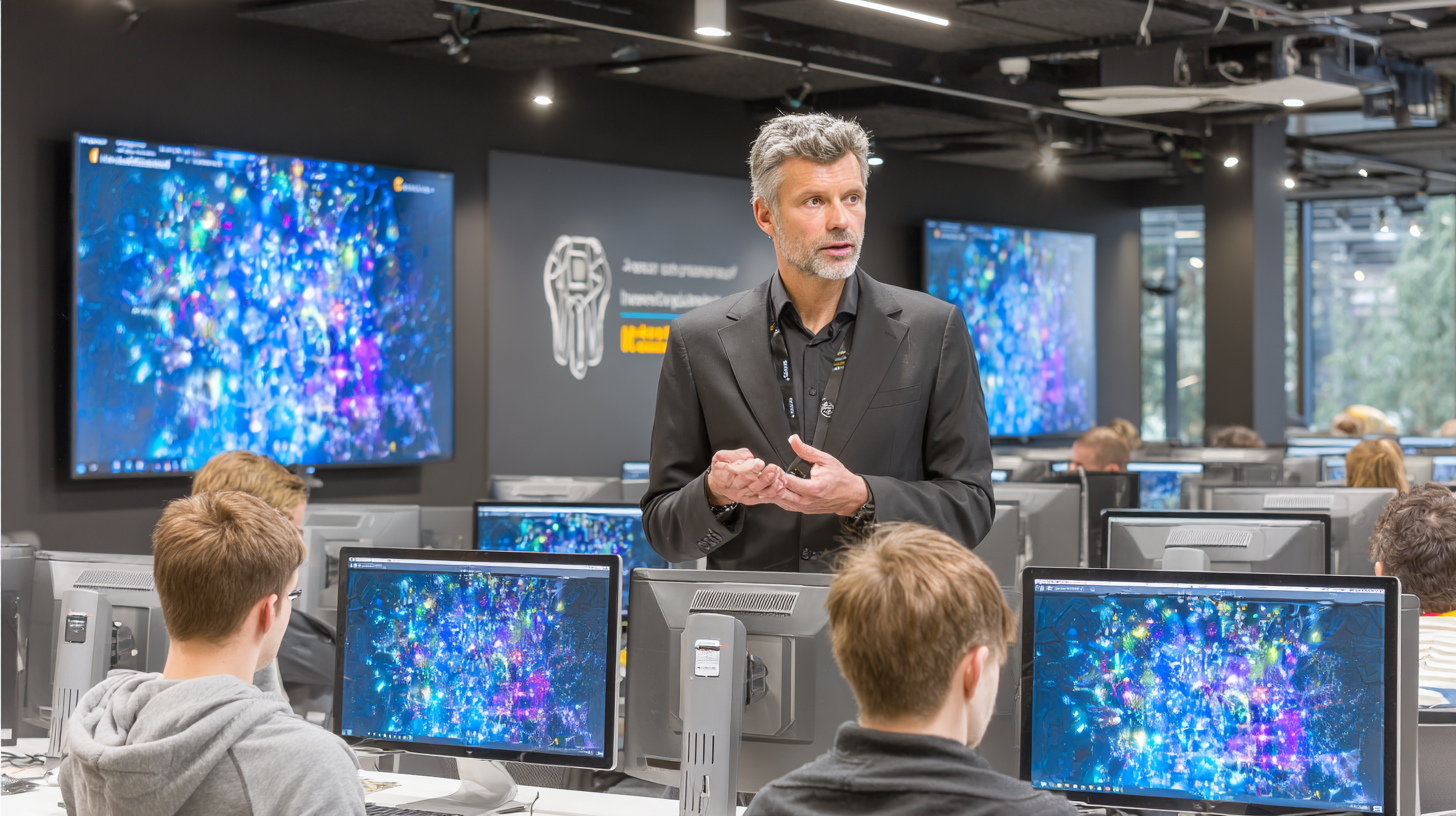
Curious how data can transform your career path? The Data Utilisation Workshop in the context of Big Data (2024-1-DE02-KA210-VET-000251001) – Module 4.2 is the pivotal answer. Understanding big data becomes crucial for vocational education and training (VET) as industries move towards digital transformation. We boost employability and elevate overall sector efficiency by embedding big data fundamentals within VET programmes. Firms are realising immense productivity gains via data-driven decision-making, significantly shortening the lag time from skill gap identification to curriculum updates. For instance, Nexteer Automotive, with its Industry 4.0 initiative, exemplifies how predictive analytics drastically reduce waste and downtime, bolstering quality and customer satisfaction. Eager to dive deep into this transformation? Join hands in exploring how a Data Utilisation Workshop can advance your journey towards mastering big data for enhanced productivity.
Firstly, visit our category WP3 for more posts like this
Secondly, visit our partner’s websites, Xient, Learning for Youth, and Matvakfi
Learning Objectives
Attending a Data Utilisation Workshop will allow participants to achieve the following learning objectives:
Objective 1
Master the ability to develop and interpret dashboards and communicate insights effectively, enhancing industry decision-making processes.
Objective 2
Gain proficiency in using big data tools such as SQL, Hadoop, and Power BI, transitioning from being a task-taker to a problem-solver in the modern workplace.
Objective 3
Understand and apply key big data concepts—volume, velocity, variety, veracity, and value—for operational efficiency and strategic foresight.
Objective 4
Equip yourself to overcome data silos and ethical challenges, fostering a culture of transparency and inclusivity in data practices.
Need Analysis
A thorough analysis reveals the critical need for a Data Utilisation Workshop in the current educational landscape. Such a workshop aims to bridge the gap between theoretical knowledge and practical application, which is essential for VET trainees, trainers, and the Big Data industry. Shortcomings in data pipelines, analytical capacity, and governance skills have caused disconnects between TVET systems and labour-market demands. Furthermore, without a solid baseline understanding of big data fundamentals, employers find it challenging to scale analytics-driven projects, and trainees remain grounded in elementary data fluency. By incorporating big data principles within VET programmes, the initiative ensures agile responses to emerging industry requirements, significantly shortening the curriculum update loop. Simultaneously, workshops empower trainers to align teaching modules dynamically with future job roles, ensuring relevance amid digital and sustainable transitions. Therefore, engaging with a Data Utilisation Workshop enhances individual skills and aids systemic advancement in educational practices.
+
Sector-wide Productivity Gains through Data Utilisation Workshop
Adopting big data in VET-intensive sectors such as manufacturing, health, and logistics is transformative in today’s dynamic economic landscape. Firstly, these sectors leverage big-data pipelines to detect concealed inefficiencies such as downtime, waste, and skill gaps. According to UNESCO’s 2024 concept note, ministries are piloting labour-market dashboards that amalgamate administrative data and web-scraped vacancies. Consequently, they identify emerging skill gaps earlier than traditional methods, like green-hydrogen technicians in Germany. As a result, curriculum updates, targeted funding, and apprenticeship adjustments now occur in quarters instead of years.
Moreover, firms benefit immensely. Predictive supply-demand models enhance inventory efficiency and lower carbon footprints. Additionally, regulators access granular data to justify public investment in upskilling and reskilling. Interestingly, the same datasets enhance national SDG-4 indicators, ensuring that economic and social targets align seamlessly. Thus, building such comprehensive data capabilities results in significant sector productivity gains, robust skill pipelines for the future, and transparent accountability.
Data Utilisation Workshop: Enhancing Employability for VET Trainees
Undeniably, data literacy in the VET sector significantly enhances employability. According to OECD’s 2024 analyses, data literacy — the ability to pose the right questions, interpret dashboards, and convey insights — can predict wages and job stability nearly as closely as numeracy. Consequently, trainees fluent in big-data concepts, such as volume and veracity, and proficient in tools like SQL and Power BI, evolve from mere task-takers to innovative problem-solvers.
This transformation enables them to optimise CNC parameters, compare energy usage, or visualise client feedback effectively during their work-based learning. Employers notice this shift and incorporate data-centred scenarios into recruitment tasks, looking for candidates proficient in CSV manipulation and data ethics discussions. Notably, data-savvy graduates adapt more swiftly to AI-enhanced workflows, mitigating the risks of displacement by automation. Embedding big-data basics throughout VET programmes discerningly increases graduates’ market value and resilience.
Data Utilisation Workshop: Pedagogical Renewal for VET Trainers
Trainers in the vocational education and training sector are crucial in disseminating data literacy. According to UNESCO monitoring, only 38% of countries offer systematic analytics CPD for TVET trainers. Consequently, trainers familiar with dashboards, ETL processes, and algorithmic biases can influence the learning landscape. For instance, they can use learning analytics signals to tailor instruction, exemplify reflective problem-solving, and integrate authentic industry datasets into curricula.
Moreover, with skill-anticipation data, trainers can continuously recalibrate course modules to suit future employment demands. This ensures curricula remain agile amid green and digital transitions. Consequently, investing in trainers’ data literacy not only accelerates systemic educational transformation but also preserves educational relevance. Therefore, enhancing trainers’ data proficiency is instrumental in maintaining a competitive and forward-thinking educational environment.
Predictive Analytics in Manufacturing: Benefits Highlighted at Data Utilisation Workshop
Integrating big-data analytics in manufacturing can drive significant quality and cost improvements. Nexteer Automotive’s Industry 4.0 programme clearly shows how big data fluency delivers tangible ROI. The company successfully streams high-frequency data into machine-learning models by equipping end-of-line tests and machining operations with IIoT sensors, predicting defects with 95% confidence. This has remarkably reduced scrap and rework, decreased downtime, and improved first-time-pass rates, boosting customer satisfaction and market share.
Success is attributed mainly to cross-functional teams adept at data cleaning and model interpretation, translating analytics into actionable process improvements. These skills, encapsulated within modern VET profiles, exemplify how mastering data fundamentals like collection, feature engineering, and model validation contributes to productivity enhancement. This reinforces why understanding data utilisation is pivotal for any data usage course or workshop.
Energy-Efficiency Optimisation in Biopharma via Data Utilisation Workshop
GSK’s Irvine plant exemplifies the potential for data-driven optimisation in biopharma. They align batch schedules with real-time energy demands by integrating Random Forest forecasting with simulation techniques. This innovative hybrid model allows planners to explore various scenarios, for example, the inclusion of solar arrays, before significant capital expenditure. The outcome was sharper forecasts, reduced emissions, and a resilient production system capable of withstanding operational disruptions.
This case highlights how data literacy can help learners in process engineering or HVAC fields achieve sustainability and cost-efficiency goals. Trainers can emulate GSK’s simplified laboratory datasets, training students in baseline analysis, model selection, and KPI visualisation. Thus, fostering data literacy in these areas not only results in sustainability gains but also enriches VET learners’ practical knowledge and skills.
Data Utilisation Workshop: Embedding AI in Healthcare
The use of AI and machine learning in healthcare offers significant improvements in inventory management. Mayo Clinic, Cleveland Clinic, and Rush University Medical Center illustrate how data-driven strategies can predict shortages, automate processing, and save billions in healthcare expenditure. By relieving staff from data-entry work, healthcare facilities can direct human resources to essential value-adding tasks instead.
This narrative effectively breaks the misconception that big data is limited to technology firms, instead highlighting its cross-sector advantages. Including real-world examples in VET courses and workshops can diversify learners’ understanding of analytics, demonstrating its broad applicability and the profound benefits of mastering data skills for industry-wide productivity.
Workshop on Practical Optimisation of Work Processes through Data Utilisation
A well-structured data utilisation workshop can significantly enhance trainees’ and trainers’ practical skills. Such workshops engage participants in a mini digital twin project using affordable IoT simulators or sensors to gather process data, including temperature and vibration. Participants then store this data in cloud databases, crafting dashboards to detect abnormalities. Prior resources, like TÜV’s “Big Data & Data Science Fundamentals” course and edX’s “Big Data Fundamentals” MOOC, provide foundational knowledge on data architecture, ETL processes, and ethics.
The workshop’s iterative framework—problem conception, data harvesting, cleaning, exploratory analysis, modelling, and completion—ensures comprehensive learning. Quantified improvements, such as a noteworthy cycle-time reduction, further solidify this experiential knowledge. Ultimately, these workshops’ collaborative structure cements conceptual understanding and furnishes learners with valuable CV-enhancing artefacts.
Resources for Learning
Curious minds eager to dive deeper into big data can explore several pivotal resources tailored to enhance understanding and practical application:
UNESCO-UNEVOC TVET Data Session (2024)
Connect with comprehensive materials, including concept notes and slide decks, offering essential insights into data-driven TVET advancements. Explore here.
OECD Working Paper No. 311 (2024)
Dive into this resource for evidence-backed insights on how non-cognitive and data skills directly contribute to employability. Read more.
TÜV Akademie: Big Data & Data Science Fundamentals (German, 2025)
This course provides foundational knowledge in big data and data science, particularly around technical and ethical considerations. Find out more.
edX – AdelaideX Big Data Fundamentals (MOOC)
A self-paced online course that furnishes a robust introduction to big data concepts and tools. Enroll now.
AnyLogic Case Study Library
Explore real-world digital-twin examples, such as GSK, for practical predictive analytics applications. Discover more.
FAQ
What exactly counts as “big data” in VET contexts?
In VET contexts, big data refers to any data set whose size, speed, or complexity exceeds the capability of traditional spreadsheets to capture, store, manage, and analyse—such as sensor streams from CNC machines or thousands of job-posting texts. (UNESCO-UNEVOC, 2024)
Do I need advanced maths to start?
No, foundational statistics and spreadsheet skills suffice to begin exploratory analysis. Modern tools abstract complex maths behind user-friendly interfaces. However, advanced roles like data engineers or ML technicians may require calculus and programming skills in Python or R.
How does big data differ from conventional MIS in TVET colleges?
Unlike traditional MIS, which summarises enrolment or exam scores annually, big data systems stream intricate logs—such as attendance swipes and LMS clicks—in real time, enabling swift interventions.
What about privacy and ethics?
GDPR and similar regimes apply, demanding ethical practices such as data minimisation, transparency, bias audits, and informed consent—subjects systematically covered in TÜV and edX fundamentals courses.
Will AI take VET jobs?
Automation will reshape task profiles instead of erasing jobs. Workers supervising, interpreting, and enhancing AI systems remain in demand. (OECD, 2024)
Tips for Immediate Action
– Start small but end-to-end: Collect a week of workshop sensor data, clean it, visualise trends, and present insights to peers.
– Cultivate the “question first” mindset: Analytics is valuable only when tied to a transparent process or learner pain point.
– Document assumptions: Metadata and data-lineage notes save hours of debugging and support auditability.
– Bridge silos: Pair a domain expert (e.g., welding instructor) with a data-curious trainee for mutual learning.
– Ethics always: Build checklists for consent, anonymisation, and bias testing from day one.
Data Utilisation Workshop: Analogies
Data as Crude Oil vs. Refined Fuel
Just as crude oil requires refining to become useful petrol, similarly, raw data is messy and therefore needs to be processed into actionable insights that ultimately can power decision-making.
Dashboards as an Aircraft Cockpit
Pilots rely on various instruments—altitude, speed, and engine health—to make quick, critical decisions. Similarly, production leads rely on live KPIs to make split-second course corrections.
Conclusion of Data Utilisation Workshop
Understanding big data is more crucial than ever. As outlined, participating in a Data Utilisation Workshop can empower you with the skills needed for a digitally transformed workspace, enhancing both employability and sector-wide productivity. Whether you are a trainee, trainer, or policy-maker, take the first step by collecting one dataset, asking one pivotal question, and sharing one insightful outcome. Document your journey and join the Module 4 community forum to iterate together. Small wins today evolve into systemic efficiencies tomorrow.
Meanwhile visit our social media channels to engage with like-minded professionals
References of Data Utilisation Workshop
AnyLogic. (2024). Enhancing energy efficiency at GSK with predictive analytics in manufacturing [Case study]. anylogic.com
OECD. (2024). Beyond literacy: The incremental value of non-cognitive skills (Education Working Paper 311). OECD Publishing. ONE MP
Pelletier, S., & Khurana, P. (2024, April 1). Using predictive analytics to improve product quality and performance. Manufacturing Leadership Council Journal. The Manufacturing Leadership Council
Somerstein, R. (2025, May 15). 3 hospital supply chain directors explain how AI is helping them manage critical inventory. Business Insider. Business Insider
TÜV Akademie. (2025). Big Data & Data Science Fundamentals [Course description]. akademie.tuv.com
UNESCO-UNEVOC. (2024, February 6). Data on TVET and skills development: Current state and options for future development – Concept note. UNESCO. unevoc.unesco.org
UNESCO-UNEVOC. (2024, April). Inter-Agency Group on TVET Newsletter. UNESCO. unevoc.unesco.org
University of Adelaide. (n.d.). Big Data Fundamentals [MOOC]. edX. edX